School of the Art Institute of Chicago Colors Teal
The Schoolhouse of the Art Institute of Chicago (SAIC) is one of America's largest accredited independent schools of art and design. It is located in the Loop in Chicago, Illinois. The school is associated with the museum of the same name, and "The Art Institute of Chicago" or "Chicago Art Institute" ofttimes refers to either entity. Providing degrees at the undergraduate and graduate levels, SAIC has been recognized past U.S. News & World Report equally one of the meridian two graduate art programs in the nation, besides equally by Columbia University's National Arts Journalism survey as the nigh influential art school in the United States.
- Schoolhouse of the art establish of chicago by collegeview com
- Portfolio for the school of the art institute of chicago
- History
- Academics
- Demographics
- Visiting Artists Plan
- Galleries
- ExTV
- F Newsmagazine
- Free Radio SAIC
- Pupil government
- Ranking
- Mirth Girth
- What is the Proper Way to Brandish a US Flag
- Property
- Academic partnerships
- References

Tracing its history to an art students cooperative founded in 1866, which grew into the museum and school, SAIC has been accredited since 1936 by the Higher Learning Commission, past the National Association of Schools of Fine art and Design since 1944 (charter member), and by the Association of Independent Colleges of Fine art and Pattern (AICAD) since its founding in 1991. Additionally it is accredited past the National Architectural Accrediting Board.
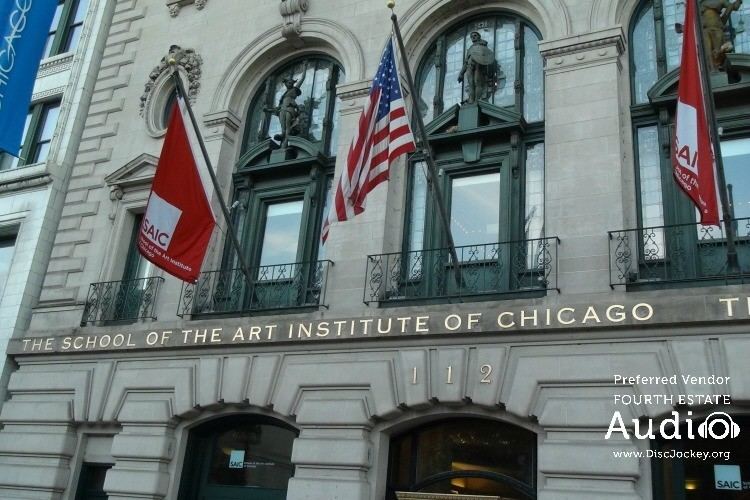
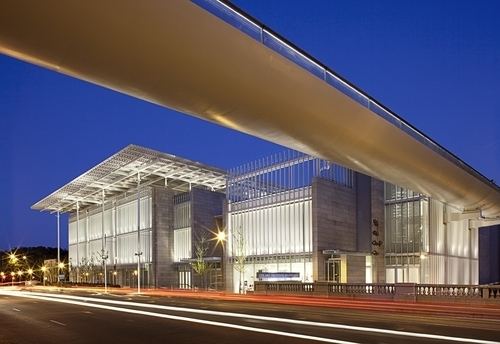
Its downtown Chicago campus consists of seven buildings located in the immediate vicinity of the AIC building. SAIC is in an equal partnership with the AIC and share many administrative resource such as pattern, construction, and human resource. The campus, located in the Loop, comprises chiefly 3 buildings: the Michigan (112 S. Michigan Ave.), the Abrupt (37 Due south. Wabash Ave.), and the Columbus (280 S. Columbus Dr.). SAIC also owns additional buildings throughout Chicago that are used as student galleries or investments.

The establish has its roots in the 1866 founding of the Chicago Academy of Design, which local artists established in rented rooms on Clark Street. It was financed by fellow member dues and patron donations. Four years later, the school moved into its own Adams Street building, which was destroyed in the Great Chicago Burn of 1871.
Considering of the school'southward financial and managerial issues after this loss, business leaders in 1878 formed a lath of trustees and founded the Chicago University of Fine Arts. They expanded its mission beyond education and exhibitions to include collecting. In 1882, the academy was renamed the Art Establish of Chicago. The banker Charles 50. Hutchinson served as its elected president until his decease in 1924.

Chancellor Walter East. Massey served as president from 2010–July 2016. The current president is Elissa Tenny, formerly the schoolhouse's provost.

SAIC offers classes in art and technology; arts administration; art history, theory, and criticism; art education and fine art therapy; ceramics; fashion blueprint; filmmaking; historic preservation; architecture; interior architecture; designed objects; journalism; painting and cartoon; functioning; photography; printmaking; sculpture; sound; time arts (time-based media); video; visual communication; visual and disquisitional studies; and writing. SAIC as well serves as a resources for issues related to the position and importance of the arts in society.
SAIC likewise offers low-residency master'southward caste programs in Studio and Writing.
As of 2022 the population at SAIC falls under these "various" groupings and numbers:
Total Enrollment: 3,590 Undergraduate students: 2,842 Graduate students: 748
Female: 71% Male person: 29%
International students: 31% Countries represented: 55
White: 37.ii% Asian or Pacific Islander: x.nine% Hispanic: 9.half-dozen% African American: iii.8% American Indian: 0.1% Multiethnic: 2.five% Not Specified: 4.8%
Midwest: 46% West: nineteen% Northeast: xviii% South: xviii%
Chicago: 11%
Founded in 1868, the Visiting Artists Plan (VAP) is one of the oldest public programs of the School of the Art Found of Chicago. Formalized in 1951 by Flora Mayer Witkowsky's endowment of a supporting fund, the Visiting Artists Plan hosts public presentations past artists, designers, and scholars each yr in lectures, symposia, performances, and screenings. It is an eclectic programme that showcases artists' working in all media, including audio, video, performance, poesy, painting, and independent film; in improver to significant curators, critics, and art historians.
The primary mission of the program is to educate and foster a greater understanding and appreciation of gimmicky fine art through discourse. VAP maintains a long-continuing commitment to ethnic and gender diversity; information technology has been at the forefront of the motility toward a more than socially engaged and theoretically informed artful dialogue.
Recent visiting artists take included Catherine Opie, Andi Zeisler, Aaron Koblin, Jean Shin, Sam Lipsyte, Ben Marcus, Marilyn Minter, Pearl Fryar, Tehching Hsieh, Homi Yard. Bhabha, Bill Fontana, Wolfgang Laib, Suzanne Lee, and Amar Kanwar among others.
Additionally, the Distinguished Alumni Series brings alumni back to the customs to nowadays their piece of work and reflect on how their experiences at SAIC have shaped them. Recent alumni speakers include Tania Bruguera, Jenni Sorkin, Kori Newkirk, Maria Martinez-Cañas, Saya Woolfalk, Jun Nguyen-Hatsushiba, and Sanford Biggers to name a few.
ExTV is a student-run time-arts platform that broadcasts online and on campus. Its broadcasts are bachelor via monitors located throughout the 112 S. Michigan edifice, the 37 S Wabash building, and the 280 S. Columbus building. It is available on campus and off campus at extvsaic.org and on cantv.
F Newsmagazine is a student-run paper with both paid and volunteer positions. The mag is a monthly publication with a run of 12,000 copies. Copies are distributed throughout the city, mainly at locations frequented by students such as pop diners and movie theaters, and is as well online.
It was awarded Best in Overall Design by the Student Society of News Blueprint in its 2012 pattern contest, as well as a number of other awards for its designers.
In recent years, F Newsmagazine has won the Pacemaker Award and Online Pacemaker Honor from the Associated Collegiate Press and Newspaper Association of America, as well as Silver and Gilded Crown awards from the Columbia Scholastic Press Clan and All-time Website from the Illinois College Press Association.
Free Radio SAIC is the educatee-run Cyberspace radio station of The School of the Art Institute of Chicago. Free Radio uses an open programming format and encourage its DJs to explore and experiment with the medium of live radio. Programme content and style vary but generally include music from all genres, audio art, narratives, live performances, electric current events and interviews. [2]
Featured bands and guests on Gratuitous Radio SAIC include Nü Sensae, The Black Belles, Thomas Comerford, Kevin Michael Richardson, Jeff Bennett, Carolyn Lawrence, and much more.
The pupil government of SAIC is unique in that its constitution resembles a socialist republic, in which 4 officers hold equal power and responsibility. Elections are held every year. In that location are no campaign requirements. Any grouping of four students may run for office, but there must always be four students.
The student government is responsible for hosting a school-wide student coming together in one case a calendar month. At these meetings students discuss school concerns of any nature. The predominant topic is funding for the various pupil organizations. Organizations which desire funding must present a proposal at the meeting past which the students vote whether they should receive monies or not. The student authorities cannot participate in the vote: only oversee information technology.
The student government is also responsible for the distribution of the Peanut Butter & Jelly Fund, Welcome Back to School Political party, Monthly Morning Coffees, Open Forums, Barbecues in the Pit (the outdoor expanse at the archway of the 280 South Columbus Building), Vacation Art Sale, and a Materials Event. In the past Educatee Regime has accomplished such things equally campus-wide recycling, and access to the Chicago Transit Say-so's U-Laissez passer.
In a survey conducted past the National Arts Journalism Plan at Columbia University, SAIC was named the "most influential art school" past art critics at full general interest news publications from beyond the United States.
In 2012, US News ranked SAIC the second best overall graduate plan for fine arts in the U.S. tying with the Rhode Isle school of Design. In January 2013, The Global Language Monitor ranked SAIC equally the #5 higher in the U.S., the highest ever for an art or blueprint school in a general college ranking.
On May 11, 1988, a educatee painting depicting Harold Washington, the beginning black mayor of Chicago, was torn down by some of the metropolis's African-American aldermen — over the protests of many who attempted to cake them — based on its content. The painting, titled "Mirth & Girth" by David Nelson, was of Washington clad simply in women's underwear property a pencil. Washington had died on November 25, 1987.
The painting was returned later on a mean solar day, and the American Ceremonious Liberties Union (ACLU) filed a lawsuit confronting the Chicago Police force Department and the aldermen. The ACLU claimed the removal violated Nelson's Kickoff, Fourth, and Fourteenth amendment rights. Nelson ended up receiving a monetary settlement for damage to the painting which occurred during its confiscation.
In February 1989, a educatee named "Dread" Scott Tyler draped the Flag of the U.s. across the floor for a piece titled "What Is The Proper Mode To Display A U.South. Flag?" The piece consisted of a podium with a notebook for viewers to express how they felt almost the showroom. Nonetheless, the podium was fix upon a flag laid on the flooring. In order for viewers to write in the notebook, they would have to walk on the flag. Viewers were occasionally arrested at the request of veterans. The school stood by the pupil's art in the face of protests and threats. That yr, the school'due south federal funding was cut from $lxx,000 to $1 and many benefactors pulled donations.
This is a listing of holding in guild of conquering:
SAIC also owns these properties outside of the immediate vicinity of the Chicago Loop:
SAIC leases:
Source: https://alchetron.com/School-of-the-Art-Institute-of-Chicago
0 Response to "School of the Art Institute of Chicago Colors Teal"
Post a Comment